A Unique Slug Generator for Django
By Justin
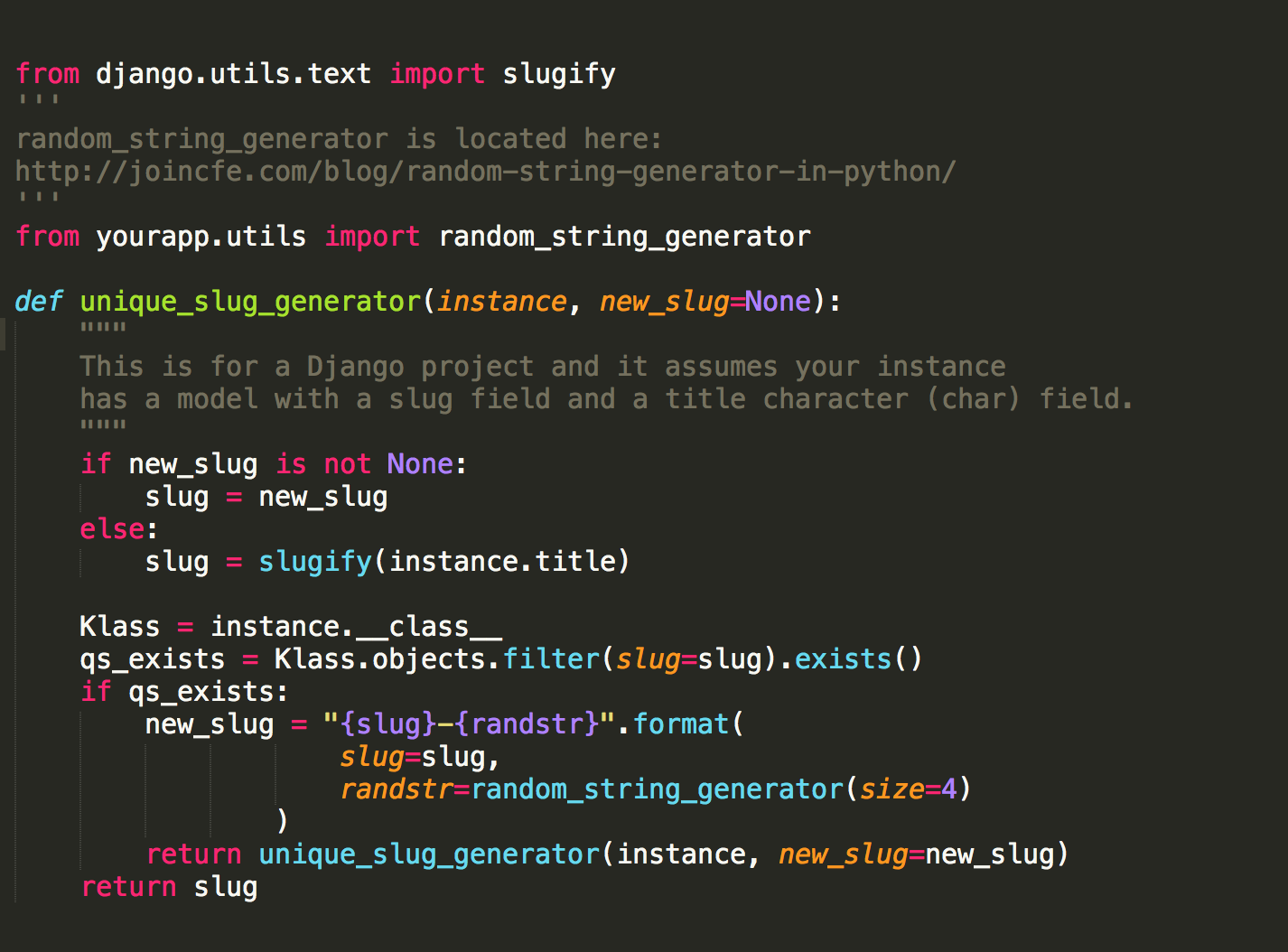
Using the Random String Generator, we create unique slugs for any given model.
from django.utils.text import slugify
'''
random_string_generator is located here:
http://joincfe.com/blog/random-string-generator-in-python/
'''
from yourapp.utils import random_string_generator

def unique_slug_generator(instance, new_slug=None):
    """
    This is for a Django project and it assumes your instance
    has a model with a slug field and a title character (char) field.
    """
    if new_slug is not None:
        slug = new_slug
    else:
        slug = slugify(instance.title)

    Klass = instance.__class__
    qs_exists = Klass.objects.filter(slug=slug).exists()
    if qs_exists:
        new_slug = "{slug}-{randstr}".format(
                    slug=slug,
                    randstr=random_string_generator(size=4)
                )
        return unique_slug_generator(instance, new_slug=new_slug)
    return slug
The above assumes that your model at least has the following:
class YourModel(models.Model):
    title   = models.CharField(max_length=120)
    slug  = models.SlugField(blank=True)
Let's break this down a little (for extra context):
What does Klass = instance.__class__ mean?
What this does is set Klass to the actual model class that the instance comes from. That allows you to call things on it.
Such as a QuerySet like Klass.objects.all().
KlassSo the queryset: Klass.objects.filter(slug=slug) is looking up all instances of that particular class that matches your lookup call (slug=slug)
Finally, adding .exists() returns a boolean value of whether or not the queryset exists.